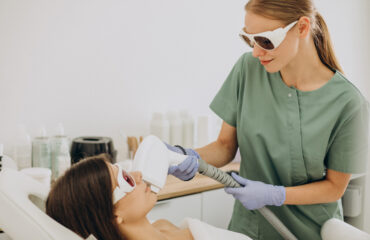
What happens after a procedure is just as important as what happens in the treatment room. Lasers, microneedling, peels, and energy devices all work by creating controlled injury to trigger repair. Whether that repair is fast, smooth, and or slow, depends heavily on how the skin is treated in the first 48–72 hours.
That’s why many cosmetic dermatologists in Los Angeles have quietly made the Crystal Fiber Mask part of their standard post-procedure protocol. It isn’t a spa accessory or a feel-good extra. It’s a medical-grade recovery tool designed to support barrier repair, hydration, and inflammation control when the skin is at its most vulnerable and most receptive.
What Makes the Crystal Fiber Mask Different from Regular Sheet Masks
The Crystal Fiber Mask is built for healing skin that has just been intentionally stressed.
The key difference is the material: bio-cellulose. This is the same class of material originally used in hospital settings for burns and wounds. Bio-cellulose:
- adheres closely to every contour of the face,
- holds a large volume of fluid without drying out quickly,
- and creates a semi-occlusive environment that reduces water loss.
This matters because post-treatment skin loses moisture quickly and has a temporarily compromised barrier. When transepidermal water loss (TEWL) is high, enzymatic repair, cell migration, and barrier lipid synthesis don’t work as efficiently.
By staying saturated and in close contact with the skin, the Crystal Fiber Mask keeps active ingredients where they need to be, for long enough to make a difference.
Why It’s So Effective After Lasers, Microneedling, and Peels
Energy-based treatments and microneedling create micro-channels or micro-zones of controlled damage in the skin. Chemical peels thin or remove parts of the outer epidermis.
The Crystal Fiber Mask addresses these issues on three fronts. First, hydration and TEWL control: post-laser or post-microneedling dryness slows repair. A bio-cellulose mask drenched in hydrating and soothing components helps stabilize water levels in the upper layers of the skin, keeping the environment optimal for regeneration.
Second, cooling and inflammation modulation: heat generated by lasers and RF devices persists in deeper layers for hours. Cooling the surface with a high-water-content, conforming mask provides symptom relief and helps reduce the inflammatory cascade that, if excessive, can contribute to post-inflammatory hyperpigmentation in some patients.
Third, temporary barrier support: immediately after treatment, the skin’s usual “gatekeeping” function is weakened. A Crystal Fiber Mask acts like a breathable, sterile dressing, physically shielding the skin from friction, airborne irritants, and microbes during a critical window.
Used correctly, it doesn’t replace the body’s repair mechanisms, it helps them work under better conditions.
How It Changes the Final Result, Not Just the First 24 Hours
The Crystal Fiber Mask shortens the “angry” phase after treatments, improves comfort so patients are less likely to over-touch or over-treat the area at home, and supports more uniform healing. That uniformity translates into smoother texture and more even tone once the recovery period is over.
Two patients can have the same laser at the same settings. The one whose barrier is supported and hydrated properly in the first 72 hours will almost always look better, sooner.
How LA Dermatologists Actually Use It in Practice
In dermatologist-led clinics in Brentwood and West Hollywood, the Crystal Fiber Mask is usually part of a structured protocol, not an optional add-on. A typical approach is simple but intentional: the mask is applied immediately after a laser, RF, microneedling, or stronger peel while the skin is still warm and reactive. It is worn in-office for 15–30 minutes to deliver cooling, sustained hydration, and a stable micro-environment.
For more intensive resurfacing cases or patients with a history of sensitivity, dermatologists may also recommend additional masks for the first one or two nights at home. This extends the benefits, hydration, comfort, and barrier support, through the critical 48–72-hour healing window when the skin is actively rebuilding.
Because the skin is more permeable during this time, using a medical-grade, controlled formula is critical. This is one of the reasons practices rooted in dermatology in Brentwood avoid generic spa masks immediately post-procedure, they’re not formulated or tested for compromised skin.
Who Benefits the Most from Crystal Fiber Masks
While nearly any post-procedure patient can benefit from optimized healing, certain groups see particularly strong advantages:
- Patients prone to redness, sensitivity, or rosacea-like reactions.
- Darker skin types (Fitzpatrick IV–VI), where unmanaged inflammation can more easily lead to post-inflammatory hyperpigmentation.
- Individuals undergoing fractional resurfacing, deeper microneedling, or combined treatments.
- Patients on tight timelines who need to control downtime for events or on-camera work.
For these patients, every hour shaved off redness, tightness, and visible irritation matters.
When is a Crystal Fiber Mask Not Appropriate
Real value also means saying when something shouldn’t be used.
A Crystal Fiber Mask is not typically applied if there is active infection or pustular acne over the treated area, if the patient has a known allergy to any component of the mask, or if the skin is weeping or oozing beyond what the dermatologist considers normal for that procedure.
In those situations, the priority often shifts to topical prescriptions, specific wound dressings, or alternative recovery protocols based on the dermatologist’s judgment.
A Small Step That Protects a Big Investment
Laser, microneedling, and resurfacing treatments represent a serious investment, you’re spending collagen, downtime, and healing capacity. Using a tool like the Crystal Fiber Mask to improve the quality and speed of that healing is a strategic choice, not a cosmetic luxury.
For patients who want their post-treatment care managed as carefully as the procedure itself, many start with Skinpeccable Cosmetic Dermatology & Laser Center, where Crystal Fiber Masks are integrated into dermatologist-designed recovery plans to protect and enhance every in-office treatment.