
This article explains why the sequence in which Botox, chemical peels, and laser resurfacing are performed matters as much as the treatments themselves, and how a coordinated treatment plan at a West Hollywood dermatology practice produces better, more lasting results than stacking everything at once.
The plan behind the appointments matters as much as the appointments themselves.
At a certain point in a patient’s cosmetic journey, they’ve had Botox, they’re interested in a chemical peel, and someone has mentioned laser resurfacing. All three are legitimate tools.
The problem is that patients often pursue them in whatever order comes available first, without any real plan connecting them.
Botox applied over inflamed post-peel skin behaves differently than Botox placed into settled tissue. A laser resurfacing session on skin that hasn’t recovered from a medium peel is doing unnecessary work with unnecessary risk. These are practical reasons why dermatologists who think about treatment planning deliberately tend to get better outcomes for their patients.
Why These Treatments Work on Different Layers
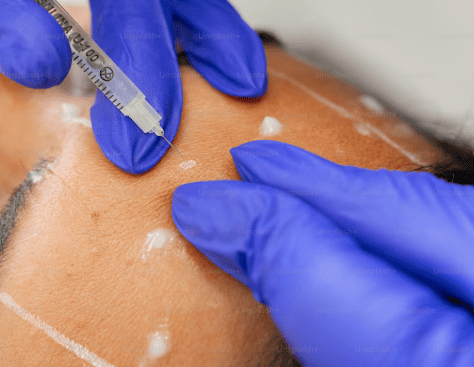
Botox in Hollywood works at the level of the muscle. It temporarily relaxes the specific muscles responsible for dynamic expression lines, reducing the depth of creases formed by repeated movement. It doesn’t change skin surface, it doesn’t improve texture, and it doesn’t address any static aging changes visible at rest. What it does exceptionally well is prevent the muscular activity that deepens lines over time.
Chemical peels work at the skin surface and upper dermal layers, depending on depth. A superficial glycolic peel accelerates cell turnover, improving tone and brightening dull skin with no real downtime. A medium-depth TCA peel penetrates further, addressing sun damage, mild hyperpigmentation, and surface textural irregularities with a recovery period of roughly one week.
Laser skin resurfacing in West Hollywood, particularly fractional laser, operates deeper still. It creates thousands of microscopic thermal zones in the dermis, triggering a collagen remodeling response that unfolds over three to six months. The downside is more meaningful recovery, ranging from a few days of redness for lighter fractional settings to one to two weeks for more aggressive protocols.
Each treatment targets something distinct. That’s exactly why they work well together when timed correctly, and why stacking them carelessly creates problems.
The Sequencing Logic
The general principle in treatment planning is to move from deeper to more superficial, and to give each treatment enough time to settle before introducing the next. Here’s what that looks like in practice.
When Botox and a chemical peel are being combined in the same treatment period, there are two viable approaches. If the peel is lighter, a superficial glycolic or salicylic peel, it can often be performed on the same day as Botox. For medium-depth peels, the cleaner approach is to wait at least two weeks after Botox before proceeding, so that the neurotoxin has fully settled and the muscle relaxation is stable before the skin’s surface is disrupted.
Laser resurfacing and Botox follow a similar logic. Some providers prefer to place Botox before a laser resurfacing session for a specific reason: when the muscles responsible for creasing are relaxed, the new collagen forming in response to the laser treatment settles without being repeatedly compressed by facial movement.
The result is that the resurfaced skin heals into a smoother baseline. If Botox is placed after the laser instead, the recommendation is to wait until the skin has fully healed, typically one to two weeks for non-ablative treatments.
Both treatments are working on overlapping skin layers through similar mechanisms, and combining them without adequate recovery time between sessions just extends the recovery and increases the risk of irritation, hyperpigmentation, and uneven healing.
Building a Plan That Actually Makes Sense
A functional treatment plan doesn’t have to be complicated, but it does require thinking across a few months rather than one appointment at a time.
A common approach for patients targeting multiple concerns might look like this: chemical peel in West Hollywood first to address surface tone, pigmentation, and texture, followed two weeks later by Botox to handle the dynamic lines the peel couldn’t touch. Three to four months into that cycle, when the skin is in a settled, well-maintained state, a fractional laser resurfacing session can address whatever the peels haven’t fully resolved, including deeper texture irregularities, residual photodamage, or acne scarring.
For patients who are primarily seeking maintenance rather than correction, lighter peels and Botox can be cycled together relatively comfortably, with the peel refreshing the skin surface every few months and Botox on its standard three-to-four-month schedule. The key is not letting both happen on skin that’s already reactive from another recent treatment.
What Changes When You Do Have a Plan
Patients who approach these treatments with a coordinated plan tend to reach their goals faster and with less overall spend than those who book treatments reactively. Because each session is built on a prepared foundation rather than working against an irritated or unsettled one, the results of each treatment are more predictable and more durable.
At a practice that takes treatment sequencing seriously, the conversation isn’t just about which treatment you want. It’s about what you’re trying to achieve, what your skin is currently doing, and how to get there in an order that makes clinical sense.
FAQ
Can I get Botox and a chemical peel on the same day? For lighter superficial peels, same-day treatment is often clinically reasonable, with the peel typically performed before the Botox injection. For medium-depth or deeper peels, most providers recommend spacing the treatments by at least two weeks so neither procedure compromises the other. Your provider should make that call based on the specific peel depth and your skin condition.
How long should I wait between a chemical peel and laser resurfacing? It depends on the peel depth, but the general principle is to allow the skin to fully recover and stabilize before introducing laser energy to the same area. For a superficial peel, a few weeks is usually adequate. After a medium peel, waiting four to six weeks before a fractional laser session is a more conservative and typically appropriate interval. Deeper peels may require longer.
Does Botox affect how a chemical peel heals? When properly spaced, no. In fact, there’s an argument that Botox placed before resurfacing may support healing by reducing the repeated mechanical creasing of the new skin during recovery. The concern is applying a peel to skin where Botox was very recently injected, which can introduce unnecessary variables during the settling period.
Is it better to start with peels or laser resurfacing if I’m new to both? Chemical peels are generally a better entry point. They’re lower-cost, lower-commitment, and allow a provider to assess how your skin responds to controlled exfoliation before introducing laser energy. A series of peels also prepares the skin by improving baseline tone and cell turnover, which can make a subsequent laser session more effective.
How do I know which combination is right for my skin? That’s exactly the question a consultation at a board-certified dermatology practice is designed to answer. The right combination depends on what’s actually driving your skin concerns, whether that’s surface tone, deep texture, muscle movement, or some of all three. A provider who can map those concerns to the appropriate treatments and sequence them intelligently will get you to your goal more efficiently than selecting treatments individually.

