Loose skin sneaks up on you. One day, your jawline looks fine, and a year later you’re tilting your chin in every photo to hide the sag. At Skinpeccable, this is one of the most common concerns we hear walking through our doors in Los Angeles, and it’s also one of the most over-explained, under-clarified topics in skincare. Patients come in having read a dozen blog posts, and they still can’t tell us the difference between “fractional” and “traditional” skin tightening.
That confusion is exactly why we wrote this guide. Our team has performed thousands of Fractional Skin Tightening sessions using Palomar laser technology at our Los Angeles clinic, and we see firsthand how this treatment compares to older, fully ablative resurfacing methods, not just in theory, but in actual patient recovery and results. This article is medically reviewed by Dr. Raphael Darvish, M.D., founder of Skinpeccable and a board-certified expert in laser medicine. Below, we break down what separates the two approaches, what to realistically expect during and after treatment, and how to decide which one fits your skin.
Key Takeaways
- Fractional Skin Tightening treats skin in a grid of microscopic zones, leaving healthy tissue between treated spots to speed healing.
- Traditional ablative resurfacing treats the entire skin surface at once, which means more downtime and a longer recovery.
- This fractional approach comes in ablative and non-ablative forms, so the right one depends on how much downtime you can afford.
- Most clients need 3 to 6 sessions, spaced 1 to 3 weeks apart, with visible improvement starting after the first treatment.
- It’s widely considered one of the best non-surgical skin-tightening treatments because it builds real collagen without surgical risk.
What Is Fractional Skin Tightening?
This advanced laser treatment creates thousands of microscopic treatment zones across the skin while leaving the surrounding tissue untouched. This approach stimulates collagen production without affecting the entire treatment area at once.
Picture restoring an old family photo pixel by pixel instead of repainting the whole thing in one pass. That’s essentially what this treatment does to your skin. The untreated tissue between each microscopic site acts as a reservoir of healthy cells, which is exactly why recovery is so much faster than with older methods.
This fractional approach is well-documented in dermatology research. Peer-reviewed studies on fractional photothermolysis have shown it stimulates measurable collagen remodeling while sparing surrounding tissue, which explains the faster healing compared to fully ablative methods. Non-ablative versions heat the deeper skin layers without removing tissue, which means less downtime but typically more sessions to reach the same result.
How Traditional Skin Tightening Works
Traditional skin tightening, specifically older-style ablative CO2 and Erbium laser resurfacing, treats the entire surface of the skin in one continuous pass. There’s no grid pattern and no untreated tissue left behind to assist healing.
This approach was the gold standard for facial rejuvenation starting in the mid-1990s, and it still produces strong results for deep wrinkles and significant photoaging. But removing the entire top layer of skin at once creates an open wound across the whole treated area, and that wound takes considerably longer to heal.
Here’s what traditional, fully ablative treatments typically involve:
- About a week of downtime, with visible redness and skin shedding
- Higher risk of prolonged sensitivity and, in some cases, scarring
- Fewer providers still offering it due to those long-term scarring concerns
- Less ability to customize intensity by facial zone
We still use traditional ablative resurfacing in select cases. But for most clients walking through our doors, this newer laser technology gives a far better balance of results and recovery time.
Fractional vs Traditional: The Real Differences
People ask us this question almost every week: “What’s actually different, besides the name?” Fair question. Here’s the breakdown.
Treatment Pattern
This newer method treats skin in micro-zones, leaving gaps of healthy tissue between each laser spot. Traditional ablative methods treat the full surface continuously, with no gaps at all. This single difference explains nearly every other distinction on this list.
Downtime
Non-ablative Fractional Skin Resurfacing usually means 1 to 3 days of mild pink, swollen skin. The ablative version of this treatment runs a bit longer, with redness and flaking for 5 to 7 days. Fully traditional ablative resurfacing often means a full week of visible healing.
Comfort During Treatment
A topical anesthetic is applied before most sessions, and clients describe the sensation as warm with mild discomfort. Traditional full-surface ablative treatments tend to feel more intense since there’s no untreated tissue to soften the sensation.
Precision
These devices let our providers adjust depth and intensity by area. We can go lighter around the eyes and more aggressive along the jawline or neck in the same session. Traditional full-coverage methods don’t offer that same flexibility.
Number of Sessions
This treatment plan typically calls for a series of around 3 to 6 sessions spaced 1 to 3 weeks apart. Traditional ablative resurfacing sometimes claims results in a single session, but the longer recovery between any repeat treatments tends to even things out over time.
Is This the Best Non-Surgical Option?
For most people seeking visible, natural skin tightening without surgery, yes, it’s currently one of the strongest options available. It combines manageable downtime with steady, cumulative collagen building.
We say “for most people” because skin tightening isn’t one-size-fits-all. Someone with fine lines around the eyes needs a different intensity than someone with deeper acne scarring or sun damage on the cheeks. That’s why a proper in-person consultation matters more than any single treatment name you’ve read online.
Why this modern skin-tightening solution stands out among non-surgical treatments:
- It stimulates genuine new collagen, not just temporary surface plumping.
- Results build gradually over two to three months, so the look stays natural.
- It works well on fine lines, acne scars, uneven texture, and pigmentation, not just laxity.
- Recovery fits into a normal week for most non-ablative sessions.
- It can be paired with other treatments depending on your goals and skin condition.
What to Expect During a Session
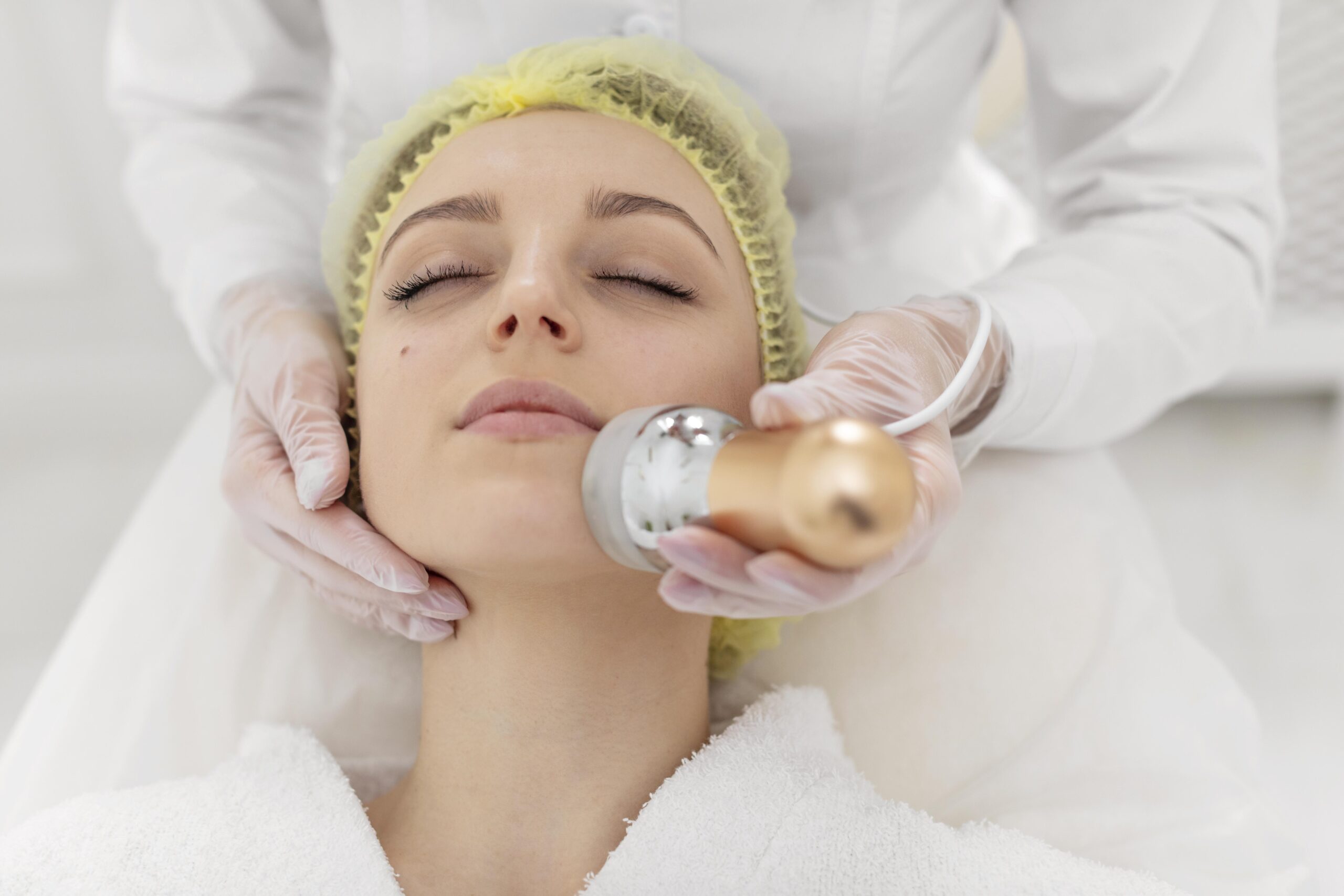
A typical session runs about 30 minutes. We start by thoroughly cleansing the skin, then apply a water-soluble blue tint called OptiGuide to help the laser track the treatment area evenly. A topical numbing cream goes on next for comfort.
You’ll feel warmth and occasional brief snapping sensations as the laser passes over the skin, but it’s tolerable for nearly everyone. There’s no incision and no general anesthesia required. Most people drive themselves home right after.
Expect mild swelling for up to three days and a sunburn-like pink or bronze tone for five to seven days with the ablative version, less with non-ablative. As new skin replaces the treated tissue, you’ll notice some light flaking. That’s a normal sign your skin is rebuilding itself, and a good moisturizer helps manage it.
Possible Side Effects and Who Should Avoid This Treatment
Like any laser procedure, Fractional Skin Tightening carries some risk, and we’d rather you hear it from us upfront. Most side effects are mild: redness, warmth, swelling, and a few days of light flaking as the skin sheds; that’s normal healing, not a problem. A small number of clients see temporary breakouts that clear on their own.
The risk worth knowing about is pigment change; treated skin can occasionally heal darker or lighter than surrounding skin, particularly in deeper skin tones if settings aren’t properly calibrated. That’s why treatment intensity should always be adjusted per skin tone, not standardized.
We’ll hold off on treatment if you’re currently on isotretinoin (or finished a course within the last six months), have an active cold sore or skin infection, are pregnant, or have an autoimmune or photosensitivity condition that affects how your skin handles heat and light.
None of this should be a deterrent; for the right candidate, this is one of the safer paths to real tightening. But “right candidate” is something we confirm in person, not over a blog post, which is exactly what the consultation is for.
Who Should Consider This Treatment?
This advanced skin rejuvenation treatment is ideal for adults experiencing fine lines, uneven skin texture, acne scars, sun damage, or early to moderate skin laxity. It’s commonly performed on the face, around the eyes, and along the jawline.
You might be a good candidate if you’re dealing with:
- Fine lines that skincare products haven’t improved
- Acne scars or enlarged pores
- Uneven pigmentation from sun exposure or melasma
- Mild sagging along the jawline, paired with texture concerns
- A preference for gradual, natural-looking results over a surgical lift
Preparing for Your Treatment
A few simple steps before your appointment make a real difference in how your skin heals.
- Avoid Retin-A, glycolic acid, and other exfoliating actives on the treatment area for at least 7 days before and after. These ingredients thin and sensitize the skin’s surface, which raises the risk of irritation, uneven healing, or a stronger-than-expected reaction once the laser is applied.
- Stay out of direct sun and skip tanning beds for at least 3 weeks before treatment. Tanned or sunburned skin holds more pigment near the surface, which increases the chance of discoloration after laser exposure.
- Men should shave the treatment area beforehand, since longer hair can interfere with how evenly the laser makes contact with the skin.
- Let your provider know if you have a history of cold sores, started antibiotics or Accutane recently, or think you might be pregnant. Each of these can change how your skin responds to heat and healing.
Our staff walks every client through a full prep checklist at consultation, so nothing is left to guesswork.
How Long Do Results Last?
Optimal improvement is usually visible within two to three months after a full treatment series, and results can last well beyond a year with good skin care. Maintenance sessions help extend that window further.
Sun exposure, smoking, and skipping SPF all shorten how long your results hold. We recommend daily sunscreen with SPF 30 or higher and a basic collagen-supporting routine after treatment. If you’re weighing this against other rejuvenation options, our laser facial page is worth a look for clients wanting a lighter, no-downtime add-on between fractional sessions.
If you’re curious how this compares to full-surface treatment for sun damage and texture, our guide on laser skin resurfacing in West Hollywood breaks that down in more detail.
Final Thoughts
Skin tightening doesn’t have to mean surgery or a week of hiding indoors. This treatment gives you a middle path between aggressive traditional resurfacing and options that don’t do much at all: real collagen stimulation, a recovery window you can actually plan around, and results that look like you, just smoother and tighter.
If you’re weighing your options, book a consultation with our team. We’ll assess your skin in person at one of our Los Angeles locations and tell you honestly whether ablative fractional, non-ablative fractional, or traditional resurfacing fits your goals best. Explore our full range of treatments on the Skinpeccable or browse more guides on our blog.
Frequently Asked Questions
Is Fractional Skin Tightening painful?
Most clients describe it as warm with mild discomfort, not painful. A topical anesthetic is applied beforehand for comfort.
How many sessions do I need?
Most people need 3 to 6 sessions spaced 1 to 3 weeks apart, with each session lasting about 30 minutes.
What’s the difference between ablative and non-ablative fractional lasers?
Ablative fractional lasers remove tiny columns of skin tissue for more dramatic results but require more downtime. Non-ablative versions heat the skin without removing tissue, resulting in less downtime but typically requiring more sessions.
Does it work on acne scars, not just sagging skin?
Yes, Fractional lasers are widely used to treat acne scars, enlarged pores, uneven pigmentation, and mild skin laxity.
How soon will I see results?
Many clients notice softer, smoother skin after the first session, with optimal improvement in fine lines and texture appearing around two to three months into a full treatment series.