You just walked out of a laser appointment. Your skin is warm, a little tight, maybe a bit pink around the edges. What you do in the next 24 to 48 hours matters almost as much as the treatment itself.
This is where a Crystal Fiber Mask comes in. It’s become one of the most requested parts of post-procedure skincare at our Los Angeles practice, part of what we call our Post Treatment Power Mask protocol, and for good reason. We’ve watched it calm irritated skin, cut down redness, and help patients see their results faster. In this guide, we’ll explain what it actually is, how it works on a skin-science level, and why our team recommends it as one of the best face masks after laser treatment for most patients.
This biocellulose sheet mask is used immediately after laser or chemical peel treatments to restore the skin’s protective barrier, reduce redness, and speed up healing, typically applied in-office and then again at home for 1 to 3 days post-treatment.
Key Takeaways
- A Crystal Fiber Mask is a bio-cellulose sheet mask soaked in concentrated hydrating and soothing actives, designed specifically for skin recovering from laser or chemical treatments.
- It works by restoring the skin’s hydrolipidic barrier, the protective film that laser and chemical peels temporarily strip away.
- Crystal Fiber Mask Benefits include reduced redness, faster healing, better product absorption, and improved microcirculation that supports tightening results.
- It’s not a luxury add-on. Our providers consider it part of standard post-procedure skincare for non-ablative laser, fractional skin tightening, and peel patients.
- Skinpeccable’s licensed medical aestheticians and physicians personally guide when and how often to use it, based on your skin type and treatment plan.
What Exactly Is a Crystal Fiber Mask?
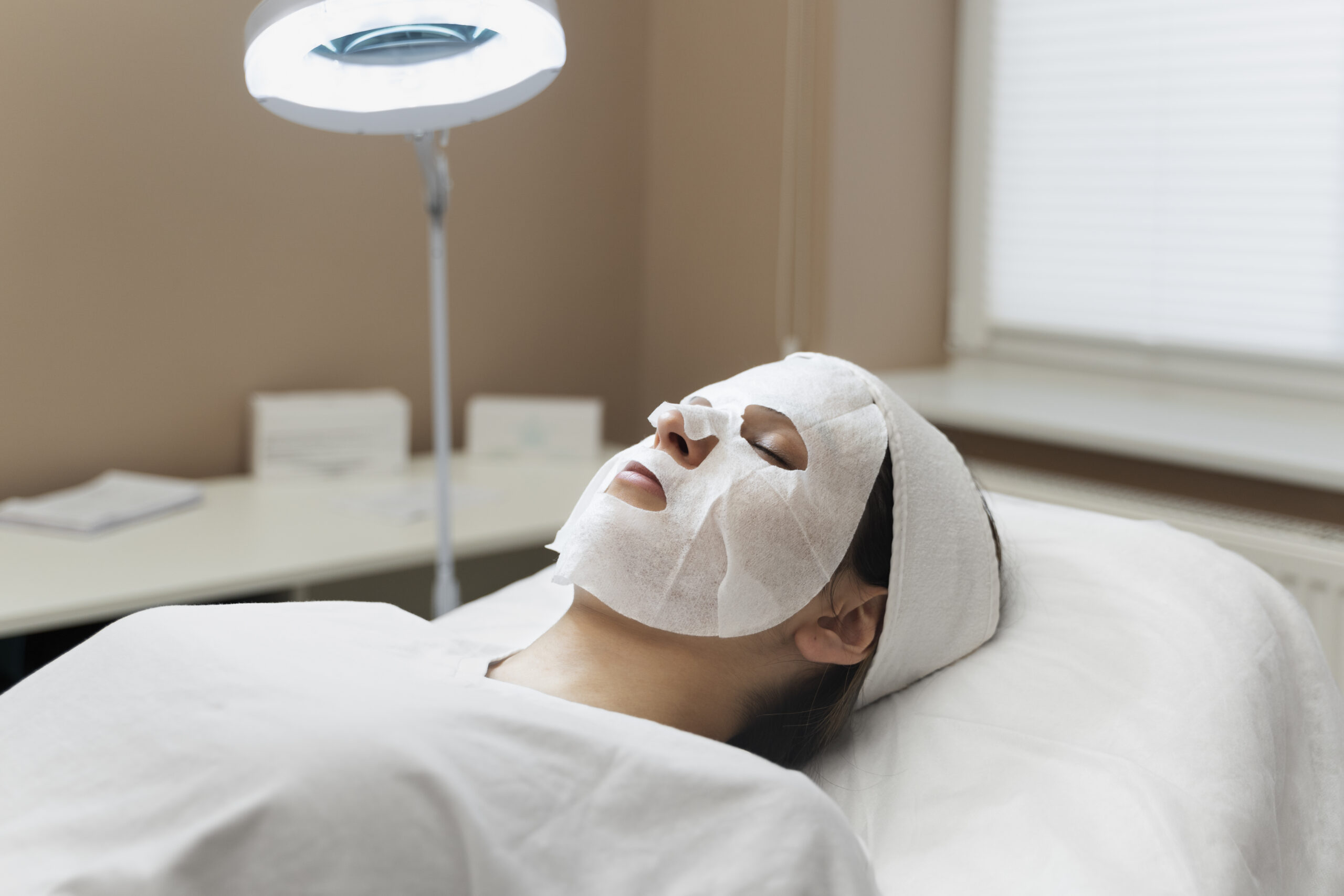
This advanced recovery mask is made from a thin biocellulose material soaked in hydrating and nourishing ingredients. It is specially designed to soothe freshly treated skin by delivering moisture without causing friction.
Unlike a basic drugstore sheet mask, the fiber here is grown, not woven. Biocellulose comes from a fermentation process that produces an ultra-fine fiber network. That network holds far more serum than cotton or paper-based masks, and it conforms tightly to the contours of your face, jaw, and neck. For someone with sensitive, post-laser skin, that snug, skin-tight fit matters. There’s no tugging, no shifting, no extra mechanical stress on skin that’s already working hard to repair itself.
We started using this style of mask regularly because traditional moisturizers, while fine for daily use, don’t sit on the skin long enough to do deep repair work right after a procedure. A mask designed for this exact moment changes that.
Why Does Skin Need This Right After a Laser or Chemical Treatment?
Skin needs extra support after laser or peel treatments because the procedure temporarily strips away its natural moisture barrier. That barrier is what keeps water in and irritants out, so when it’s compromised, skin becomes dry, reactive, and more vulnerable. This applies whether you’ve had a Laser Facial, an IPL Photofacial, or a chemical peel.
Here’s what’s actually happening underneath the surface. Chemical exfoliants and laser energy work by triggering controlled injury to the dermis and epidermis. That controlled injury is the whole point. It stimulates collagen, clears damaged cells, and renews the skin’s texture over time.
But there’s a tradeoff. During that renewal window, the skin’s hydrolipidic film, the thin layer of natural oils and water that protects it, gets disrupted. Moisture escapes faster. Sensation increases. Redness shows up more easily. The skin is, quite literally, more exposed to outside aggressors like pollution, sun, and bacteria.
This specialized recovery mask is designed to support the skin when its protective barrier is temporarily weakened. It provides deep hydration and essential nutrients during the critical healing period, making it especially beneficial after a chemical peel or non-ablative laser treatment.
How Does a Crystal Fiber Mask Actually Work? The Science Behind It
The mask works by re-establishing the skin’s protective barrier while boosting microcirculation, which speeds healing and improves how well the skin absorbs nutrients. It’s a two-part mechanism: hydration and circulation.
1. Rebuilding the Hydrolipidic Barrier
The concentrated actives in the mask mimic the skin’s natural lipid composition. As the biocellulose fiber releases its serum slowly over the application time, it helps rebuild that thin protective film. A restored barrier means less water loss, less stinging, and noticeably calmer skin within minutes.
2. Boosting Microcirculation
Good blood flow brings oxygen and nutrients to skin tissue, and it carries waste products away. The mask’s formulation is designed to support this circulation locally. Better microcirculation means the treated area gets what it needs to repair faster, and it also helps the visible tightening effects of treatments like our Skin Tightening and Fractional Skin Tightening services show up more clearly.
3. Reducing Redness and Inflammation
Many patients see visible calming within the first application. The cooling, hydrating effect on inflamed tissue helps bring down the flush that’s common after non-ablative laser sessions or peels.
What Are the Benefits of a Crystal Fiber Mask?
Patients who use this mask as part of their post-procedure skincare routine report a few consistent things. Here’s what tends to stand out:
- Less visible redness within the first hour of use
- Reduced tightness and discomfort, especially in the 24 hours following treatment
- Smoother skin texture as hydration replaces the dry, papery feeling some treatments leave behind
- Better absorption of follow-up products, since the skin barrier is more receptive once rehydrated
- A calming, almost cooling sensation that many describe as immediate relief
It’s also worth noting that this mask isn’t only for treatment days. We recommend it for patients dealing with sun-related dryness or mild burns too, since the underlying barrier disruption is similar.
Is It the Best Face Mask After Laser Treatment? What Our Team Looks For
Whether a mask qualifies as one of the best face mask after laser treatment comes down to three things: ingredient concentration, fiber quality, and whether it’s been tested on freshly treated, sensitized skin specifically. Not every “calming mask” on a shelf meets that bar.
Most consumer sheet masks are formulated for general use, dry skin in winter, a tired complexion before an event, that sort of thing. They’re not built for skin that’s just undergone a controlled clinical injury. A mask used immediately post-treatment needs to be fragrance-free, free of common irritants, and concentrated enough to do real barrier-repair work in a single sitting.
Our physicians and aestheticians evaluate post-treatment products the same way we evaluate the treatments themselves: by what the skin actually needs at that stage of healing, not by marketing claims. That’s the standard we hold our Power Mask protocol to.
When and How Often Should You Use It?
Most patients benefit from using the mask immediately after treatment, in-office, and then again at home in the days following if skin feels tight or irritated.
A general guide our team follows:
- Immediately post-treatment – applied in-office right after laser or peel sessions to calm and hydrate right away.
- Days 1 to 3 after treatment – as needed, especially if redness or tightness lingers.
- After sun exposure – if skin feels dry, hot, or mildly burned, even outside of a treatment cycle.
We don’t recommend a rigid daily schedule for everyone. Skin type, the specific procedure performed, and individual sensitivity all factor in. This is exactly why we walk patients through a personalized aftercare plan rather than handing out a generic instruction sheet.
A Note on Trust: Why Medical Guidance Matters Here
Post-procedure skin is not the time to experiment with random products. We’ve seen patients reach for whatever moisturizer is in the bathroom cabinet, and it’s usually the wrong call, sometimes containing fragrance, alcohol, or active ingredients that aggravate already-sensitized skin.
At Skinpeccable, our licensed physicians and trained aestheticians oversee aftercare recommendations as closely as the procedures themselves. We’ve worked with thousands of patients across our Brentwood and West Hollywood locations, and that hands-on clinical experience shapes which products we actually put on patients, not just what’s trending. Clinical research on post-laser skin recovery has documented that procedures like intense pulsed light therapy frequently cause transient skin barrier impairment, erythema, and discomfort, making targeted post-procedure skincare a real clinical priority rather than a cosmetic extra. A peer-reviewed study on post-IPL skin recovery backs up exactly what we observe in our own treatment rooms week to week.
If you’re unsure whether a product is appropriate for your specific skin and treatment history, that’s a conversation worth having with a provider before you apply anything post-procedure.
How This Fits Into a Full Skincare Routine
This recovery mask is designed to support healing, not replace your everyday skincare routine. After your skin has recovered, resume your regular regimen with sunscreen, gentle cleansers, and provider-recommended maintenance treatments like Medical Facials or Microdermabrasion.
Pairing the right in-office treatment with the right at-home recovery products is what produces results patients are actually happy with.
Final Thoughts
This specialized recovery mask isn’t just an extra add-on. It helps restore the skin’s natural barrier after laser or chemical treatments by boosting hydration, reducing inflammation, and promoting circulation for a smoother recovery.
If you’re scheduling a laser session or chemical peel, ask your provider whether this kind of post-procedure skincare step is part of your plan. It usually should be.
Curious about our specific protocol? Visit our Post Treatment Power Mask page to see how we use it, or head to our homepage to explore the full range of laser and skincare services we offer at Skinpeccable.
About the Reviewer:
Dr. Darvish is a physician at Skinpeccable, Los Angeles, with extensive experience in laser treatments, post-procedure skincare protocols, and cosmetic dermatology across the practice’s Brentwood and West Hollywood locations.
Frequently Asked Questions
What is a Crystal Fiber Mask made of?
A biocellulose sheet soaked in concentrated hydrating and soothing actives, grown through a fermentation process rather than woven like traditional cotton sheet masks.
How soon after a laser treatment should I apply it?
Most patients use it immediately in-office right after their session, then again at home over the following 1 to 3 days if skin feels tight or irritated.
Can this mask help with sunburn, not just post-procedure skin?
Yes, since sun damage causes similar barrier disruption, the mask works well for dryness or mild burns even outside a treatment cycle.
Will using it speed up my fractional skin-tightening results?
Indirectly, yes. Better microcirculation supports faster healing, which helps tightening results become visible sooner.
Is this mask safe for sensitive or reactive skin types?
It’s specifically formulated fragrance-free and irritant-free, making it suitable for sensitized, freshly treated skin.
How long should I leave the mask on?
Application time is typically guided by your provider, since it depends on your specific treatment, skin type, and sensitivity level.
Does it replace my regular skincare routine afterward?
No, It’s a short-term recovery step. Once your skin stabilizes, you’ll return to your normal routine, including sunscreen and gentle cleansing.