If you’ve noticed thin red or purple lines webbing across your thighs, or a rope-like vein bulging along your calf, you’ve probably already searched “laser vein removal” and landed on a dozen different answers. That’s because spider veins and varicose veins aren’t the same problem, and they don’t respond to the same laser.
At Skinpeccable, we see this mix-up constantly during consultations. Patients often assume that if a laser can zap one type of vein, it should work on the other too. It doesn’t quite work that way. Spider veins sit just under the skin’s surface and usually respond to targeted heat delivered from the outside. Varicose veins are deeper, often connected to a faulty vein valve, and usually need treatment delivered from the inside of the vein itself. Our spider veins and varicose veins treatment page covers both conditions, but this post breaks down exactly where laser fits into each one, and where it doesn’t.
Key Takeaways
- Spider veins (thin, web-like, under 1mm) usually respond well to Nd:YAG or KTP surface lasers, though sclerotherapy is still considered the first-choice treatment for leg veins.
- Varicose veins (bulging, rope-like, 3mm or larger) are treated with endovenous laser ablation, a fiber inserted directly into the vein, not a surface laser.
- Laser and sclerotherapy achieve similar clearance rates for leg spider veins, but laser tends to be more painful, according to head-to-head clinical studies.
- Endovenous laser treatment for varicose veins closes the diseased vein in roughly 95% of cases and has largely replaced surgical vein stripping.
- Many patients need both approaches: endovenous laser for the source vein and surface laser or sclerotherapy for the visible spider veins left behind.
Spider Veins and Varicose Veins Aren’t the Same Condition
Both start with the same underlying issue: a vein valve that isn’t closing properly, letting blood pool instead of flowing back up toward the heart. But the size and depth of the affected vein changes everything about how it looks and how it should be treated.
Spider veins, sometimes called telangiectasias, are the fine red, blue, or purple threads you see just under the skin. They’re usually smaller than 1mm and sit close to the surface. Most of the time they’re a cosmetic concern rather than a medical one, though a small percentage do point to deeper vein problems.
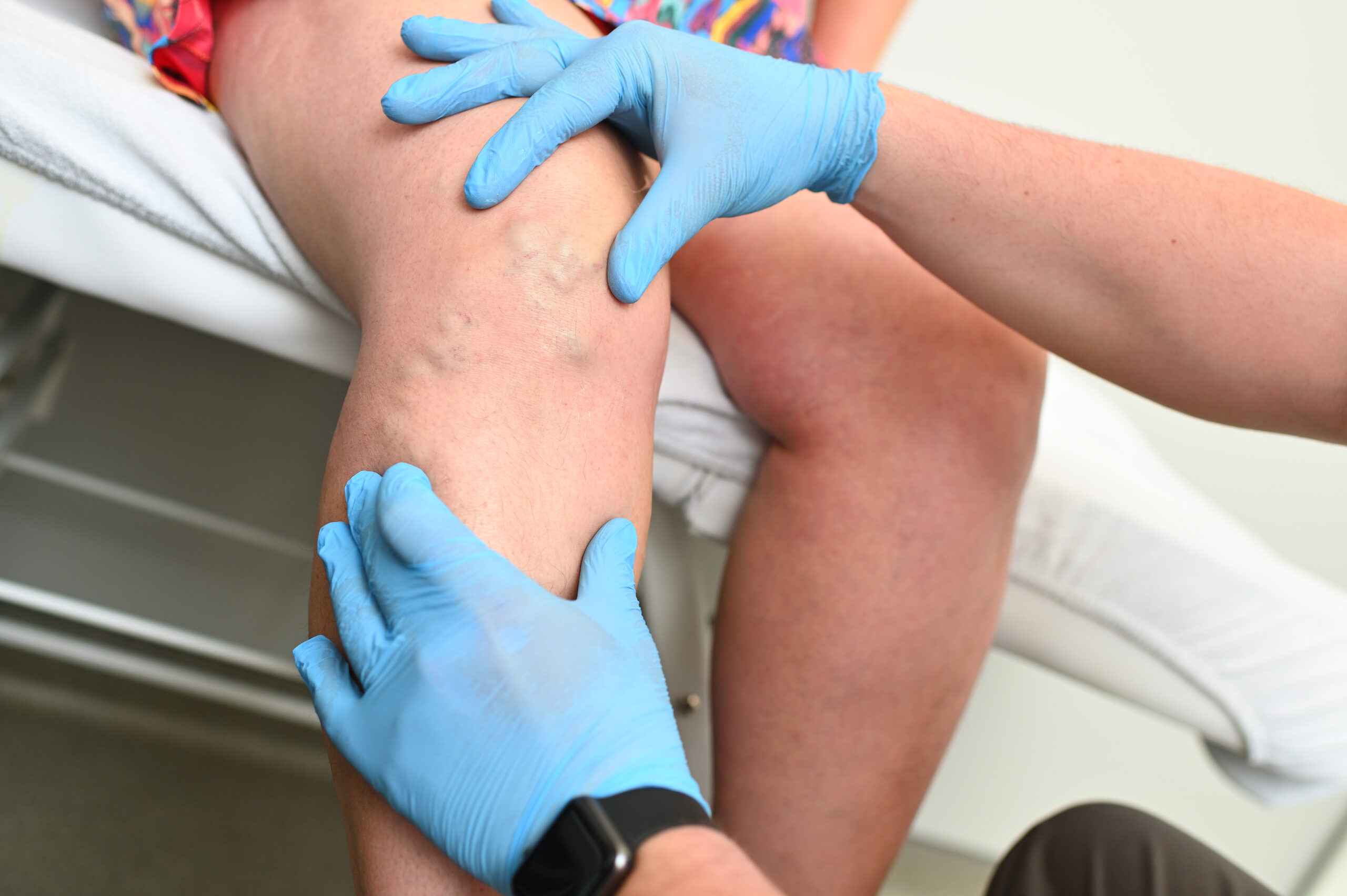
Varicose veins are larger, 3mm or more, and sit deeper in the leg. They bulge, twist, and are often visible above the skin. They’re more likely to come with symptoms like aching, heaviness, throbbing, or swelling by the end of the day, and they’re more likely tied to reflux in a larger vein like the great saphenous vein.
This difference is exactly why the laser treatment used for one won’t necessarily work for the other.
How Laser Treatment Works for Spider Veins
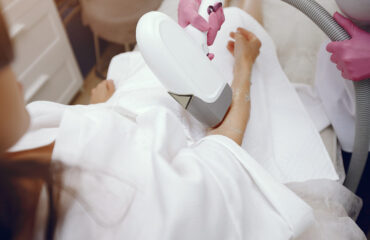
For spider veins, we use a surface laser, typically an Nd:YAG (1064nm) or KTP (532nm) device. The light passes through the skin and is absorbed by hemoglobin inside the vein, heating it until it collapses and is gradually reabsorbed by the body.
Nd:YAG lasers penetrate deeper, which makes them a good option for larger or more stubborn leg veins. KTP lasers work best on very fine, superficial vessels, which is why they’re often used on the face.
Most patients need two to four sessions spaced several weeks apart, and downtime is minimal, usually some redness or mild swelling for a day or two. Clinical studies on long-pulsed Nd:YAG lasers report clearance in the majority of treated facial and leg telangiectasias, though leg veins tend to respond a bit more slowly than facial ones.
Here’s the part that surprises people: surface laser is not actually the first-choice treatment for leg spider veins. That title still belongs to sclerotherapy, where a solution is injected directly into the vein to close it. Multiple studies comparing the two treatments head to head found similar clearance rates between laser and sclerotherapy, but laser was consistently rated more painful by patients. Sclerotherapy is generally reserved for veins large enough to inject, while laser becomes the better option for very fine vessels, facial veins, or patients who don’t want needles.
Why Varicose Veins Need a Different Approach
You can’t treat a varicose vein the same way you treat a spider vein, because the problem sits deeper and involves a larger vein with a failed valve. This is where endovenous laser ablation (EVLA), sometimes called EVLT, comes in.
Instead of aiming a laser at the skin, a thin fiber is threaded directly into the diseased vein under ultrasound guidance. Local anesthesia numbs the area, and as the fiber is slowly withdrawn, laser heat seals the vein shut from the inside. Blood naturally reroutes through healthy veins nearby, and the treated vein is gradually reabsorbed by the body.
This isn’t a cosmetic quick fix. It’s treating the actual source of the problem, which is why closure rates run around 94 to 95 percent, with long-term success holding up well over several years. Most patients are back to normal activity within a day or two, with some soreness or bruising for a week or so afterward.
Endovenous laser has largely replaced traditional vein stripping surgery because it’s done in-office, requires no general anesthesia, and comes with a much easier recovery. It’s now considered, alongside radiofrequency ablation, the standard first-line treatment for varicose veins caused by reflux in a larger vein.
Do You Need Both Treatments?
Often, yes. It’s common for a patient to have both an underlying varicose vein issue and a cluster of spider veins on the surface, especially around the ankles or behind the knee. In these cases, we typically treat the source vein first with endovenous laser, then follow up with sclerotherapy or surface laser for the remaining spider veins once the larger vein has been addressed. Treating the spider veins first without dealing with the source vein tends to lead to disappointing, short-lived results, since the veins can simply refill from the untreated reflux.
What to Expect During Recovery
Recovery looks different depending on which treatment you had:
- Surface laser for spider veins: mild redness or swelling for a few hours to a couple of days, no real restrictions on activity.
- Sclerotherapy: similar to laser, sometimes with mild bruising, compression stockings recommended for a short period.
- Endovenous laser for varicose veins: some soreness, tightness, or bruising along the treated vein for one to two weeks, compression stockings usually worn for several days to support healing, most people resume normal activity within a day or two.
Sun exposure should be avoided on treated areas for a few weeks with any of these treatments, since heat and UV exposure can affect how the skin heals.
Choosing the Right Provider
Vein treatment isn’t one-size-fits-all, and getting it right depends on an accurate read of what’s actually going on beneath the skin. A proper consultation should include an assessment of whether your spider veins are purely cosmetic or connected to a larger vein problem, since that changes the entire treatment plan. At our Brentwood and West Hollywood locations, every vein consultation starts with a physician evaluation, not a one-size-fits-all script, so the plan actually matches what’s happening in your legs.
If you’re weighing your options, our laser vein removal page walks through what a treatment session looks like from start to finish, and how we decide which approach fits your particular veins.
For additional background on vein disease and treatment options from a medical source, the Mayo Clinic’s guide to varicose veins is a solid reference.
Ready to Get Rid of Your Spider or Varicose Veins?
The only way to know which treatment is right for your veins is a proper evaluation, not guesswork. Schedule a consultation at Skinpeccable and our physician-led team will map out a plan built around your veins, your skin, and your goals, whether that means surface laser, sclerotherapy, endovenous laser, or a combination of all three.
Frequently Asked Questions
Can laser treatment get rid of varicose veins completely?
Endovenous laser ablation closes the diseased vein permanently in most cases, with success rates holding around 94 to 95 percent. The treated vein is reabsorbed by the body over time, though new varicose veins can develop elsewhere in the future.
Is laser treatment or sclerotherapy better for leg spider veins?
Studies show similar clearance rates for both, but sclerotherapy tends to work faster with less discomfort. Laser is usually reserved for very fine vessels, facial veins, or patients who prefer to avoid injections.
How many sessions does spider vein laser treatment take?
Most patients need two to four sessions spaced several weeks apart, though this varies depending on how many veins are being treated and how they respond.
Is endovenous laser treatment for varicose veins painful?
The procedure is done under local anesthesia, so discomfort during treatment is minimal. Some soreness, tightness, or bruising along the leg is common for one to two weeks afterward.
Do spider veins come back after treatment?
The treated veins themselves shouldn’t return, but new ones can form over time, especially if an underlying vein problem wasn’t addressed first. That’s why we often recommend treating the source vein before the visible spider veins on the surface.