This article challenges the assumption that choosing the right neighborhood for laser hair removal guarantees better results, and makes the case that clinical factors including device selection, energy settings, and provider expertise have far more influence on outcomes than zip code.
Location is a convenience decision but results are a clinical decision.
The outcomes of laser hair removal depend on specific, measurable variables: the wavelength of the device being used, how the settings are calibrated to your skin and hair type, the provider’s experience reading those variables in real time, and whether the clinic actually owns the right equipment for your profile.
What Actually Determines Whether Your Results Are Good
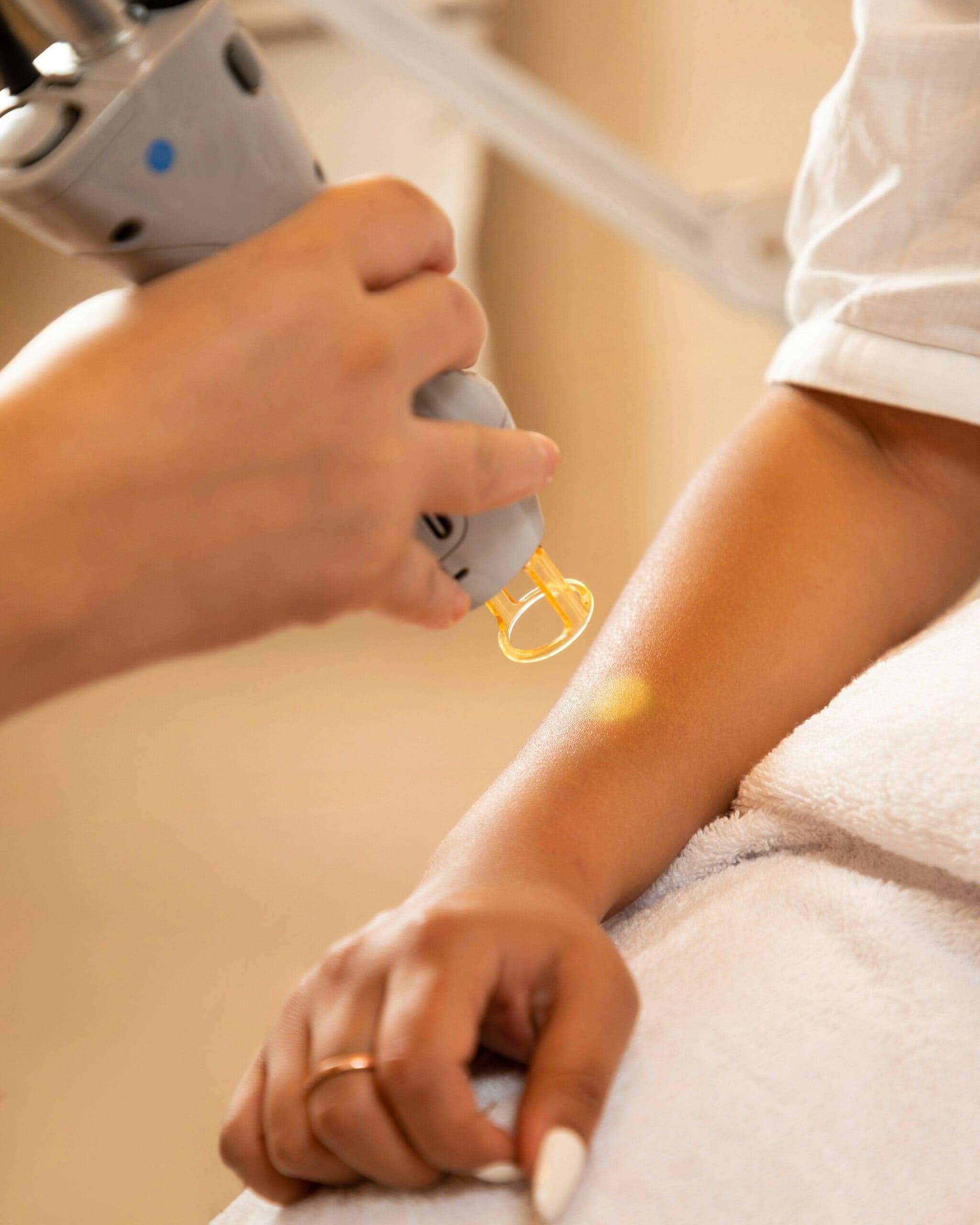
Laser hair removal works by targeting melanin in the hair follicle with a specific wavelength of light. The laser converts that light to heat, damages the follicle, and over a series of sessions reduces hair growth significantly. Simple in theory, but the execution depends on matching the treatment parameters to the individual patient.
Two patients sitting in the same chair, getting treated with the same device, can have completely different outcomes based on their skin type, hair coarseness, hair density, and whether the energy settings were adjusted to account for any of that. A clinic in Brentwood with a single IPL machine and a standard protocol is objectively a worse option than a clinic in West LA with a dual-wavelength system and a provider who knows how to use it. The address is just an address.
This is why the first question to ask is: “what device do they use, and does it match my skin and hair profile?”
The Device Library Problem
Laser hair removal in Brentwood or anywhere else in Los Angeles should start with an honest device conversation. Does the clinic have both alexandrite and Nd:YAG capabilities? If not, which patients are they equipped to serve safely?
A clinic with only one device isn’t a bad clinic by default, but it may not be the right clinic for you specifically, and a provider who doesn’t lead with that distinction isn’t giving you complete information.
The alexandrite laser at 755 nm is highly effective for lighter skin tones because its shorter wavelength is aggressively absorbed by hair follicle melanin.
The Nd:YAG at 1064 nm bypasses that risk by penetrating deeper into the dermis before significant melanin absorption occurs. It’s the clinically recommended default for darker skin tones precisely because it separates the target tissue from the skin surface more reliably.
Why Settings Matter as Much as Device Choice
A provider who runs the same settings on every patient with the same hair color is not doing this correctly.
Tanned skin, for example, changes the equation even if your baseline Fitzpatrick type normally tolerates alexandrite. Sun exposure temporarily increases epidermal melanin, which means a patient who’s been outdoors needs adjusted settings, a delayed appointment, or a switch to a safer wavelength for that session. A provider who doesn’t check for that before treatment starts is skipping a meaningful safety step.
Hair coarseness also changes how sessions are planned. Dense, coarse follicles in areas like the bikini line or underarms may respond differently than finer facial hair, and a realistic session count should reflect that.
When a clinic quotes you a flat number of sessions without knowing your hair profile, that’s a marketing answer and not a medical one.
The Consultation Is Where Results Actually Begin
Laser hair removal in West LA or anywhere else in the city should begin with a proper assessment. That means the provider looks at your skin under appropriate lighting, places you on the Fitzpatrick scale explicitly, asks about recent sun exposure and any medications that affect photosensitivity, and discusses what realistic hair reduction looks like over a complete treatment series based on your specific profile.
None of that is complicated, but not every clinic does it. Some skip straight to booking because they’re confident their device handles “most” patients. Most is a wide category that doesn’t include everyone, and it doesn’t protect the patients who fall outside it.
When the consultation feels thorough and individualized, that’s a signal the provider is treating you as a patient. When it feels like an intake form followed by a pricing conversation, something is being skipped.
What Makes a Provider Worth Traveling For
Calibrated settings correctly, and a clinical approach to assessment rather than a sales approach are qualities that exist at laser hair removal in West LA, Brentwood and other clinics in other parts of the city.
If you’re doing this research in Los Angeles, the practical checklist is short: confirm which devices the clinic uses, ask whether they can treat your skin type safely with the equipment they have, and treat any clinic that can’t answer those questions as a signal to keep looking. The right provider will welcome those questions, not redirect them.
FAQ
Does it make a difference whether I go to a dermatologist versus a med spa for laser hair removal? It can. A dermatologist-supervised practice typically offers a higher level of clinical oversight, which matters when treatments involve meaningful safety variables like skin type and device selection. Whoever performs the treatment, the key is confirming they have the right equipment and the clinical knowledge to use it appropriately for your profile.
How many sessions do most patients need? Typically six to eight sessions spaced several weeks apart, though this varies significantly by area, hair density, and skin and hair type. Patients with darker skin tones may need more sessions because Nd:YAG settings are adjusted conservatively to protect the skin, requiring a slightly longer treatment course to reach similar reduction levels.
What should I bring to my first laser hair removal consultation? Come with a realistic sense of your sun exposure over the past few weeks, a list of any medications you’re taking (some affect photosensitivity), and specific questions about which device the clinic uses and why it’s appropriate for your skin type. Avoid tanning or self-tanner before the appointment.
Is it safe to get laser hair removal on darker skin? Yes, with the right device. Nd:YAG lasers are specifically designed to treat deeper skin tones safely by penetrating beyond the epidermal melanin layer. Clinics claiming that laser hair removal isn’t possible for dark skin are either using outdated technology or don’t have the right equipment.
Can I switch clinics mid-treatment if I’m unhappy with my results? Yes, and it’s sometimes the right call. If you switch, the new clinic should reassess your skin and hair profile from scratch rather than just continuing from where the previous series left off. Different devices and settings may change what’s recommended.