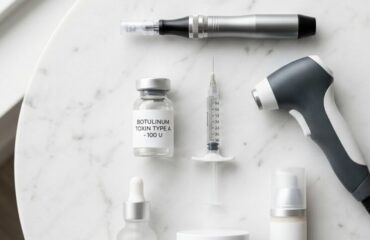

There’s a specific moment a lot of patients describe: standing at the bathroom sink, applying the same serum that used to work, and realizing it isn’t doing anything anymore. Not because the product changed. Because the skin underneath it did. By your late twenties, collagen production is already declining every year, and no amount of topical peptides can rebuild volume that’s been lost beneath the surface. That’s the gap Sculptra West Hollywood treatments are designed to close, not by masking the problem, but by prompting the skin to rebuild its own structure.
Collagen Loss Is a Structural Problem, Not a Surface One
Fine lines and hollowed cheeks aren’t caused by dryness or neglect. They’re caused by a slow decline in the collagen scaffolding that gives skin its shape. Creams and serums work at the surface layer. They can improve texture and hydration, but they don’t reach the deeper dermis where volume loss actually happens.
That distinction matters because it explains why patients often feel like they’re “doing everything right” and still not seeing the results they want. A cleanser and a retinol routine were never built to solve a structural problem. They were built to maintain skin that already has its underlying support intact.
How Sculptra Actually Works Beneath the Skin
Sculptra is an injectable made of poly-L-lactic acid (PLLA), a biocompatible material used in cosmetic treatments. According to the Cleveland Clinic, PLLA acts as a collagen stimulator that is absorbed by the body after treatment and encourages your cells to produce more collagen over time.
Because collagen production happens gradually, results do not appear immediately. Most patients begin noticing fuller-looking skin several weeks after treatment as their body’s natural collagen develops, making realistic expectations an important part of the treatment process.
What a Treatment Series Actually Involves
Most patients need more than one session. A typical plan involves several appointments spaced weeks apart, allowing collagen to build in stages rather than all at once. During each visit, a provider injects the material into targeted areas, usually the cheeks, temples, or nasolabial folds, depending on where volume has been lost.
The appointment itself is short. What matters more is the routine that follows it.
The Massage Routine Nobody Mentions Until After
One detail that catches a lot of first-time patients off guard: Sculptra requires aftercare that goes beyond avoiding sun exposure. Providers typically recommend a “5-5-5” massage protocol, five minutes, five times a day, for five days after each session. Skipping this step is one of the more common reasons patients end up with small bumps under the skin instead of a smooth result. It’s a small commitment, but it’s not optional if you want the outcome the treatment is capable of producing.
Setting a Timeline You Can Actually Plan Around
Because results build gradually, timing matters more with Sculptra than with treatments that produce instant change. Most patients start noticing a difference around four to six weeks after the first session, with fuller results appearing after completing the full series over several months.
That means Sculptra isn’t the right choice if you need to look different by next weekend. It is a strong choice if you’re planning months ahead, for a wedding season, a milestone birthday, or simply because you’ve decided this is the year you address volume loss instead of layering another product on top of it.
Who Tends to Get the Best Results
Sculptra generally works best for patients who have noticeable volume loss rather than fine surface lines, and who understand that the process unfolds over months, not days. It isn’t the right fit for someone looking for an instant, dramatic change, or for concerns that are better addressed with a different type of filler.
A provider should walk through your specific goals, facial structure, and medical history before recommending Sculptra over an alternative. Not every concern calls for the same treatment, and a good consultation should make that clear rather than defaulting to whatever’s being promoted that month.
Choosing a Provider Who Treats This as Medicine
Sculptra has unique injection requirements, and results depend heavily on technique and placement. A provider who explains the process clearly, sets a realistic timeline, and walks through the aftercare routine in detail is generally a better sign than one who focuses mainly on before-and-after photos.
Disclaimer: This article is intended for general informational purposes and is not a substitute for medical advice. Talk with a licensed provider about whether Sculptra is appropriate for your skin and goals.
The Bottom Line
Topical products still matter. They protect the skin you have. But once volume loss becomes the actual concern, no serum is going to reverse it. Sculptra works by rebuilding what’s been lost, gradually and from within, rather than sitting on top of the problem.
Interested in natural-looking facial rejuvenation? Discover Sculptra services at Skinpeccable and speak with an experienced provider about whether collagen stimulation is right for you.
Frequently Asked Questions
How soon will I notice a difference?
Most patients see initial changes around four to six weeks after their first session, with fuller results developing after the full recommended series is complete.
How long do results typically last?
Because Sculptra rebuilds your own collagen rather than adding filler on top, results commonly last two years or longer, with occasional maintenance sessions to sustain the effect.
Is Sculptra the same as a traditional dermal filler?
No. Hyaluronic acid fillers add immediate volume by physically occupying space under the skin. Sculptra stimulates your body to produce its own collagen over time, which is why the change is gradual rather than instant.
Do I really need to do the massage routine?
Yes. The 5-5-5 massage protocol helps distribute the product evenly and is one of the main things that separates a smooth result from one with small nodules under the skin.